Small Figures in a Vertical World
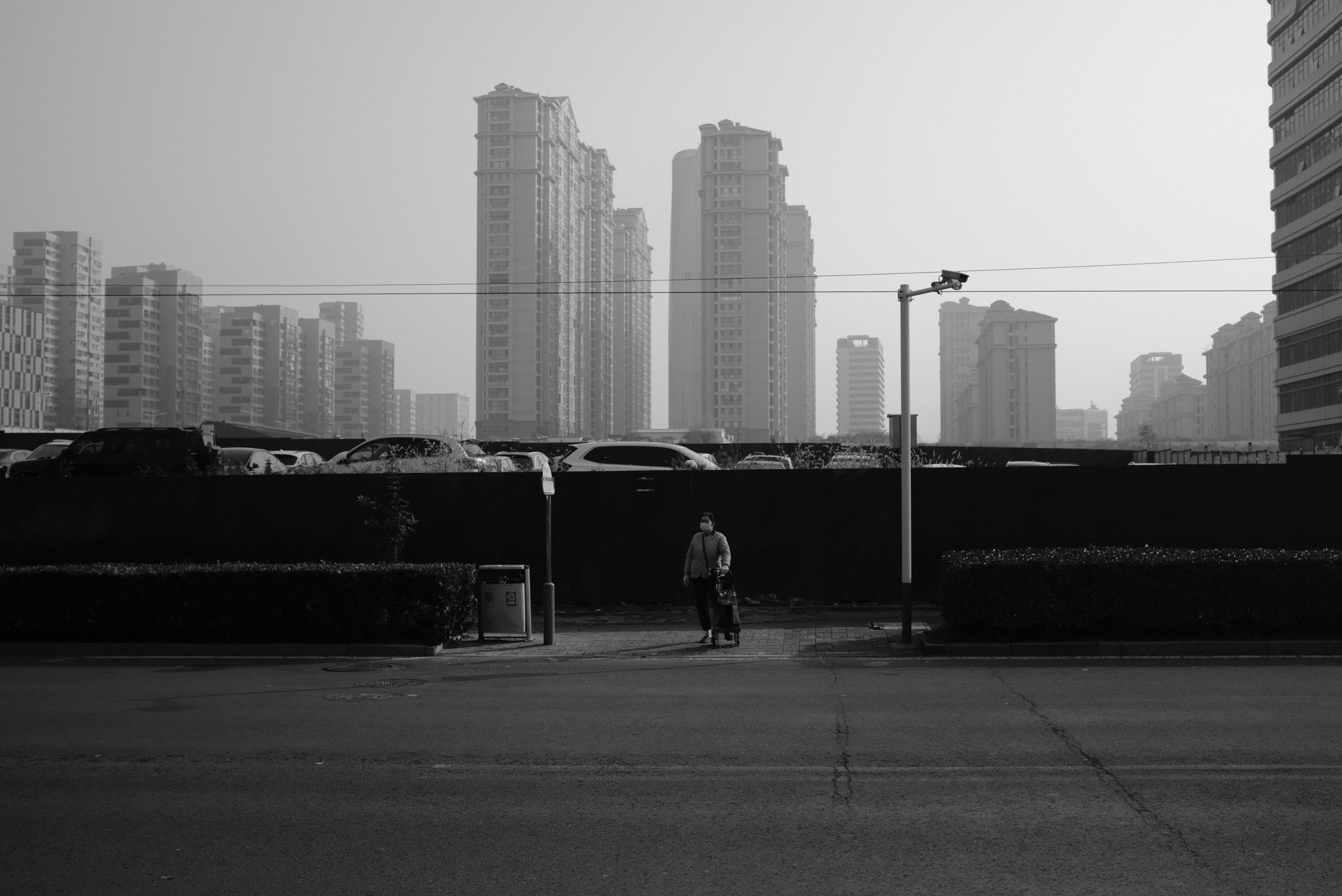
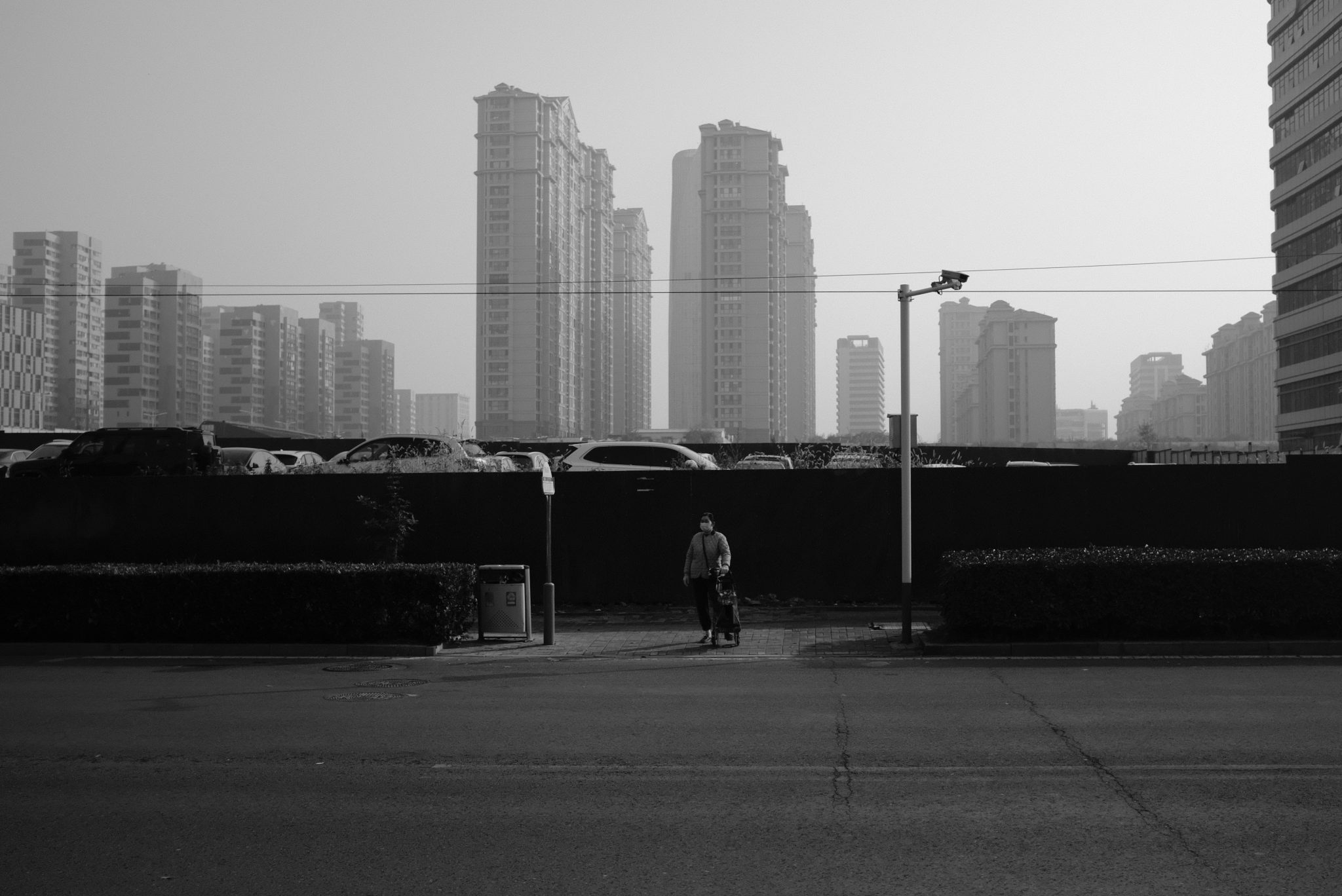
A single figure crosses the frame at street level, dwarfed by a skyline of tall residential towers rising in the distance. The city appears vast, structured, and indifferent, built in layers of concrete and repetition. Cars rest behind a dark barrier, suspended between movement and stillness, while the buildings stand silent, watching over everything below.
The person walking remains almost anonymous, reduced by scale rather than hidden by shadow. There is no dramatic gesture, no visible urgency. The act is simple: crossing, moving forward, continuing. Yet within the composition, this small action becomes significant. It introduces life into a space dominated by architecture.
This photograph speaks quietly about modern urban existence. Cities are often imagined as places of density and activity, but here, emptiness prevails. Space separates rather than connects. The road in the foreground feels wide and exposed, while the towers in the background feel distant and unreachable. The human presence bridges these two extremes without fully belonging to either.
Culture is often shaped by environments like this one. Large-scale urban planning prioritizes efficiency, repetition, and height. The individual adapts, navigating spaces not designed for intimacy. The photograph captures that tension with restraint. The person does not resist the city, nor do they disappear within it. They simply move through it.
The symmetry of the buildings contrasts with the unpredictability of human movement. Nothing about the architecture changes. It remains fixed, monumental, and impersonal. The human figure, by contrast, exists in time. Each step alters the moment, even if it leaves no lasting trace.
There is also a quiet sense of resilience here. Despite the scale imbalance, life continues. Daily routines persist beneath towering structures. The city may be overwhelming, but it is still inhabited, crossed, and lived in.
This image reminds us that culture is not only created in iconic landmarks or crowded centers. It also exists in ordinary crossings, in silent transitions from one side of the street to the other. In a world built vertically, human experience remains horizontal, grounded in movement, repetition, and presence.