When Architecture Dictates the Rhythm
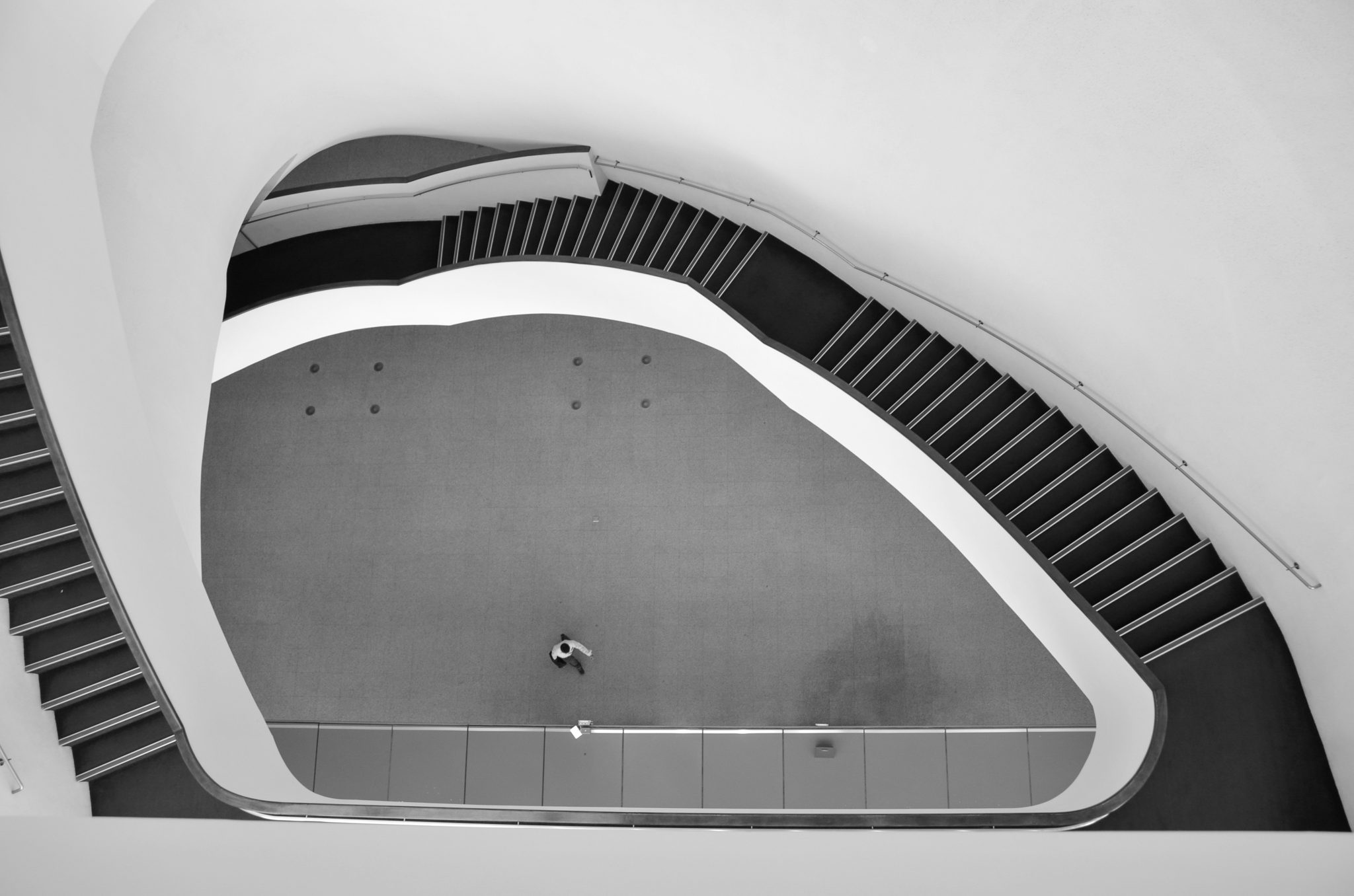
Seen from above, the space unfolds like a controlled diagram. Curved staircases frame an open central area, guiding the eye in smooth, deliberate lines. The architecture feels precise, intentional, almost surgical. At the center, a lone figure moves across the floor, reduced to scale by the structure that surrounds them.
The building does not react to the person. It remains fixed, indifferent, and complete. Every curve has been calculated. Every stair step repeats with mechanical consistency. The human presence, by contrast, introduces unpredictability. One body, one direction, one moment in time. The image becomes a dialogue between permanence and passage.
This photograph speaks about how architecture shapes behavior without ever speaking. The curves invite movement while restricting deviation. There are no sharp corners, no chaos, only flow. The person follows a path not explicitly drawn, yet clearly implied. Freedom exists, but within boundaries designed long before their arrival.
Culture often celebrates architecture as an object to admire. This image shifts the focus toward experience. The building is not a monument here, but a system. It organizes space, controls rhythm, and influences how bodies move through it. The human figure does not challenge the structure. They adapt to it, briefly animating an otherwise silent environment.
The overhead perspective reinforces this reading. From above, individuality fades. The person becomes a marker of scale, a reminder that these spaces are built for use, not just for vision. Yet the distance also creates emotional detachment. We observe rather than participate. The scene feels calm, controlled, and slightly isolating.
There is a subtle tension in this balance. Architecture promises order and clarity, but it can also impose distance. The vastness of the space dwarfs the individual, suggesting that modern environments often prioritize form over intimacy. Still, movement continues. The person walks, not hurried, not lost, simply passing through.
This photograph captures a quiet truth about contemporary culture. We inhabit spaces that guide us silently, shaping our routines and gestures. We move within systems designed by others, leaving only fleeting traces behind. In this moment, architecture speaks not through words, but through curves, proportions, and silence.